It’s the third day already.
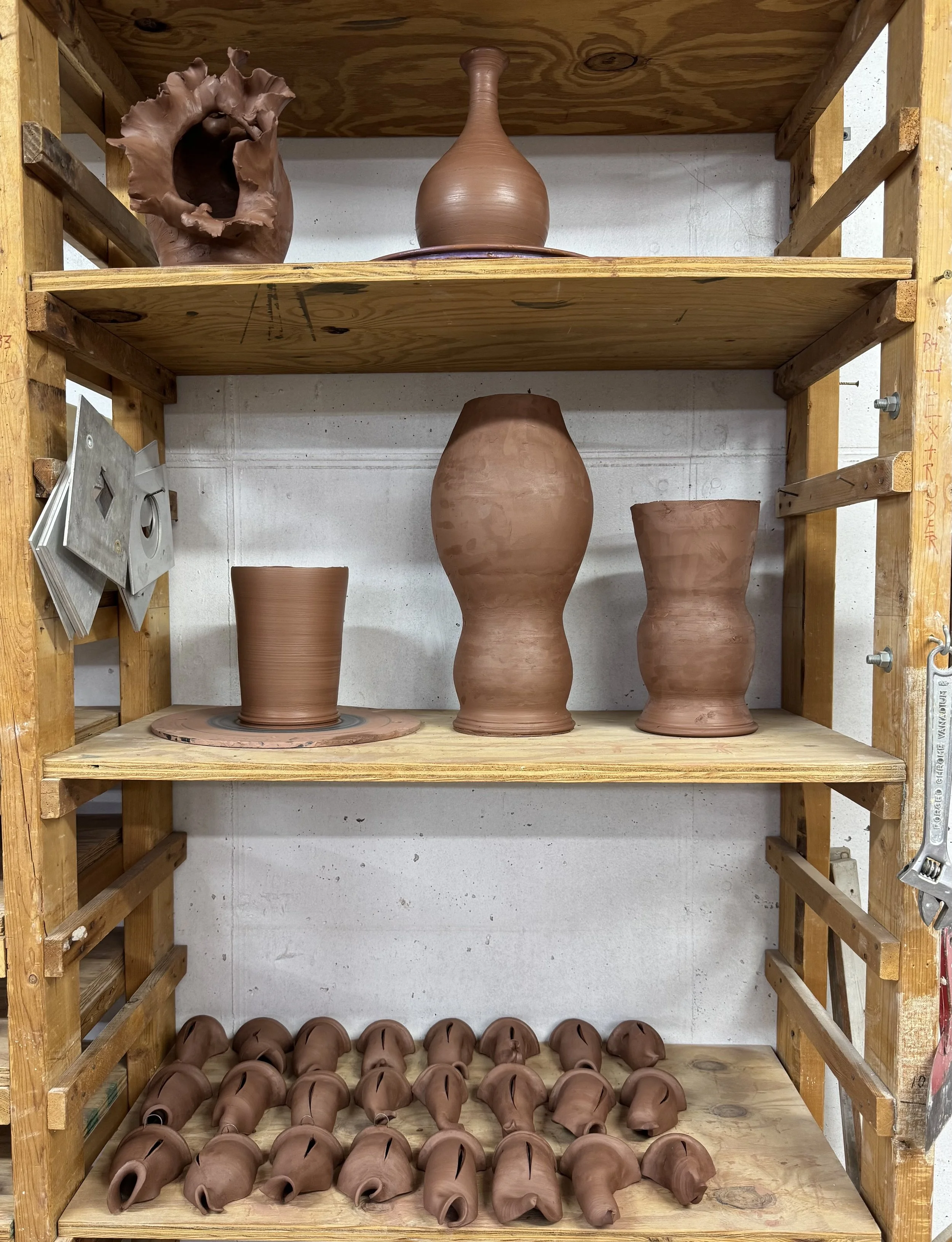
I got to Queen City Clay around 8:00 this morning and started working right away. I cleaned up my glaze testers, threw more vase bases, and handbuilt onto the bases I made yesterday once they were leather hard.
I’m still not completely sure about the glaze testers, but I think that might be the point. At first, I wanted them to look like little vases cut in half. Then they started looking more like snails. Then they became something else again. I took the wires out and moved them into what had been the bottom of each form. I also cut a slit into each one because, if I’m testing surfaces for my larger pieces, I need the testers to somehow acknowledge that the final vases will have openings.
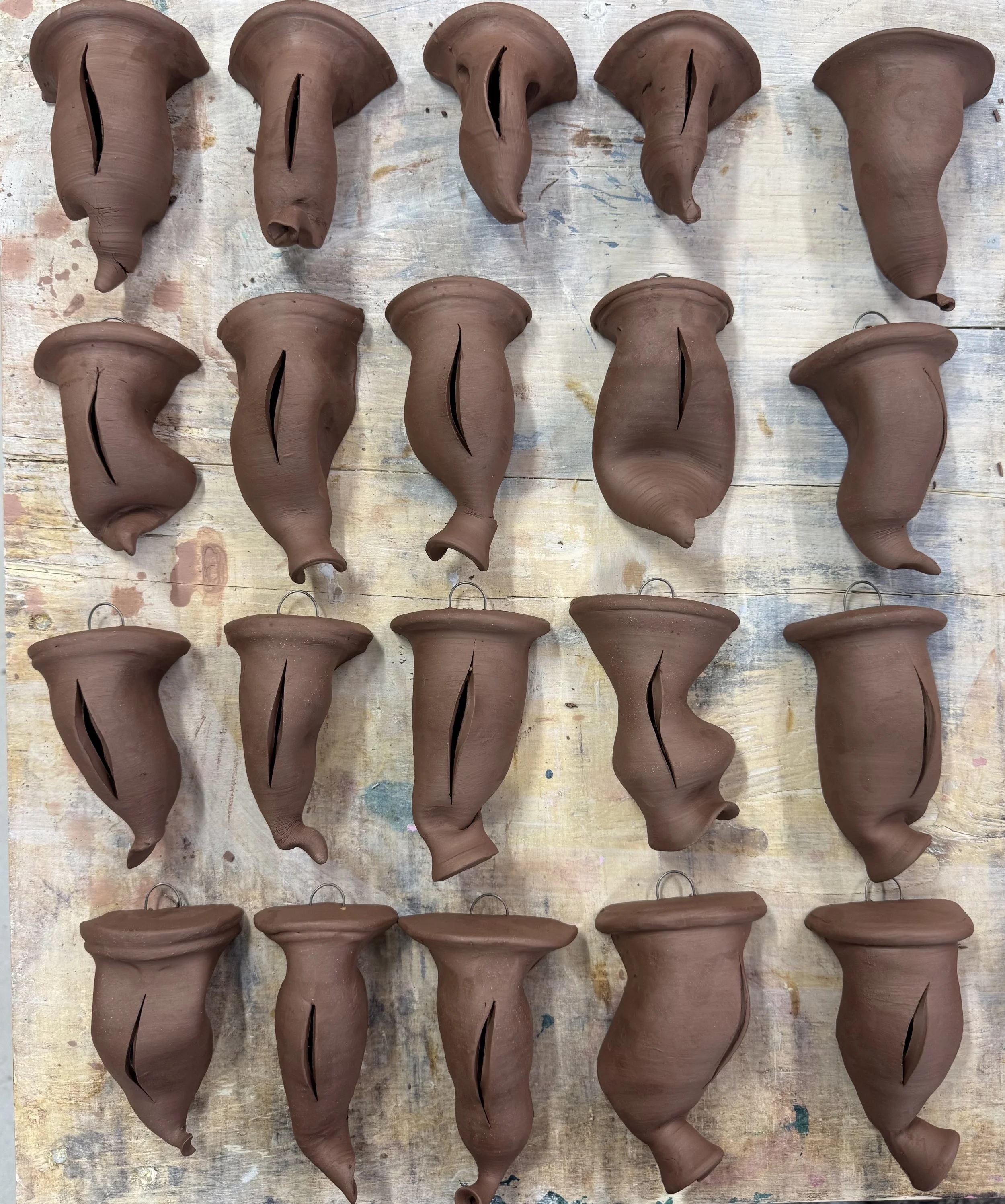
That small decision helped me understand them differently. They stopped being just glaze testers and started becoming small forms with their own presence.
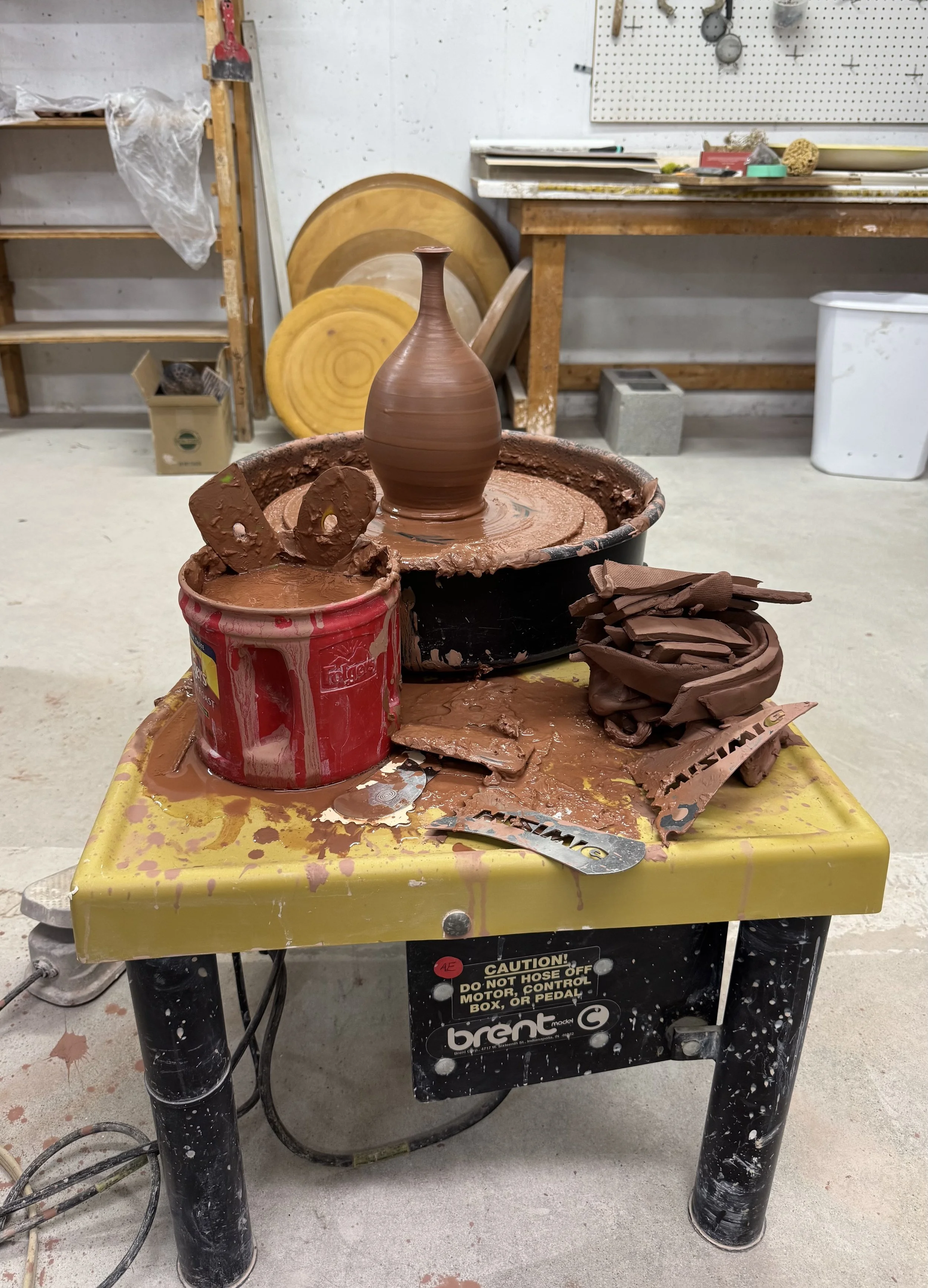
After that, I went back to the wheel. I had some ideas about building up from thrown bases, but I also wanted to see what would happen if I tried throwing the whole vase form instead of handbuilding the upper portion. It went well. I tried working with seven pounds of clay, but five pounds seems to be the right amount for me right now. It gives me enough material to build height and volume without feeling like I’m fighting the clay the whole time.
I also spent part of the day watching videos and trying to pay attention to what I could improve in my throwing. Then I threw a few more things. It was a full day: testing, changing direction, learning, adjusting, and trying again.
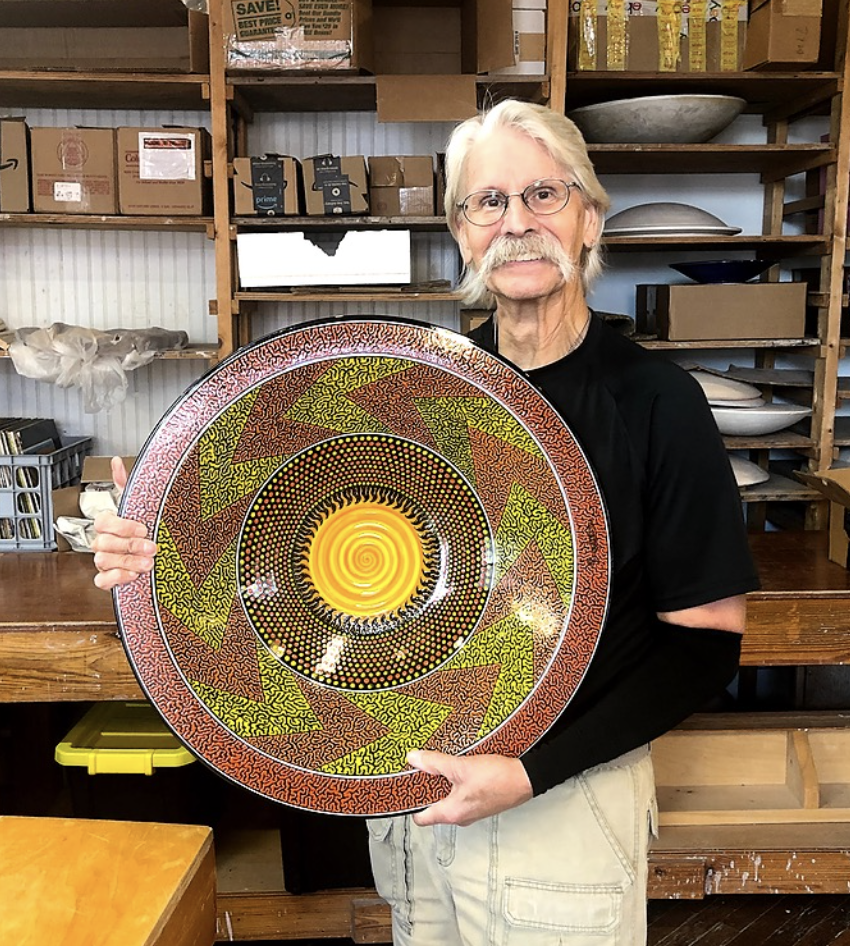
One of the other things I spent time with today was learning more about Patrick Lee Dougherty, the artist whose generosity helped make this visiting artist studio possible. Dougherty was a ceramic artist whose work centered on the vessel, but not in a narrow way. He wrote about the challenge of painting “in the round,” and about wanting the imagery on his pots to feel inseparable from the form itself. His work moved from functional pottery into painted vessels, platters, custom sinks, tiles, and larger architectural ceramics.
I keep thinking about that: a life in clay that kept expanding outward.
All residencies are different, but I feel like when you are invited into a space, part of the responsibility is to learn who has been there before you. A studio is never just a room with wheels, tables, shelves, and kilns. It carries the decisions, labor, generosity, and imagination of the people who built it, worked in it, and chose to leave something behind for others.
I am grateful for this time and this space. I am grateful for the chance to work here, to test things, to be uncertain, to make mistakes, and to keep going. And today I feel especially grateful to Patrick Dougherty for having the foresight to think beyond his own studio practice and imagine a space that could continue to support other artists after him.
Oh…and I am taking a class tonight!