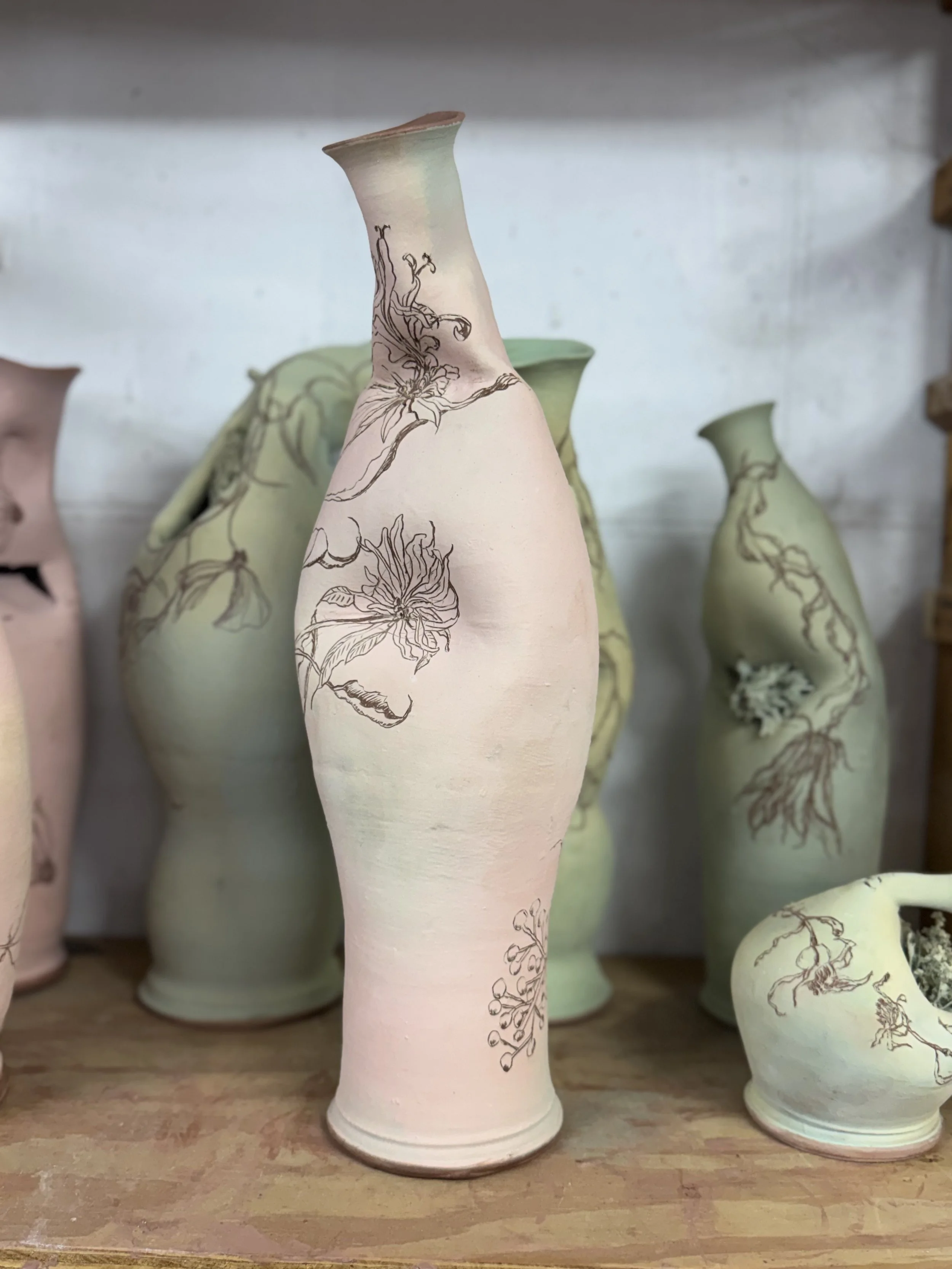
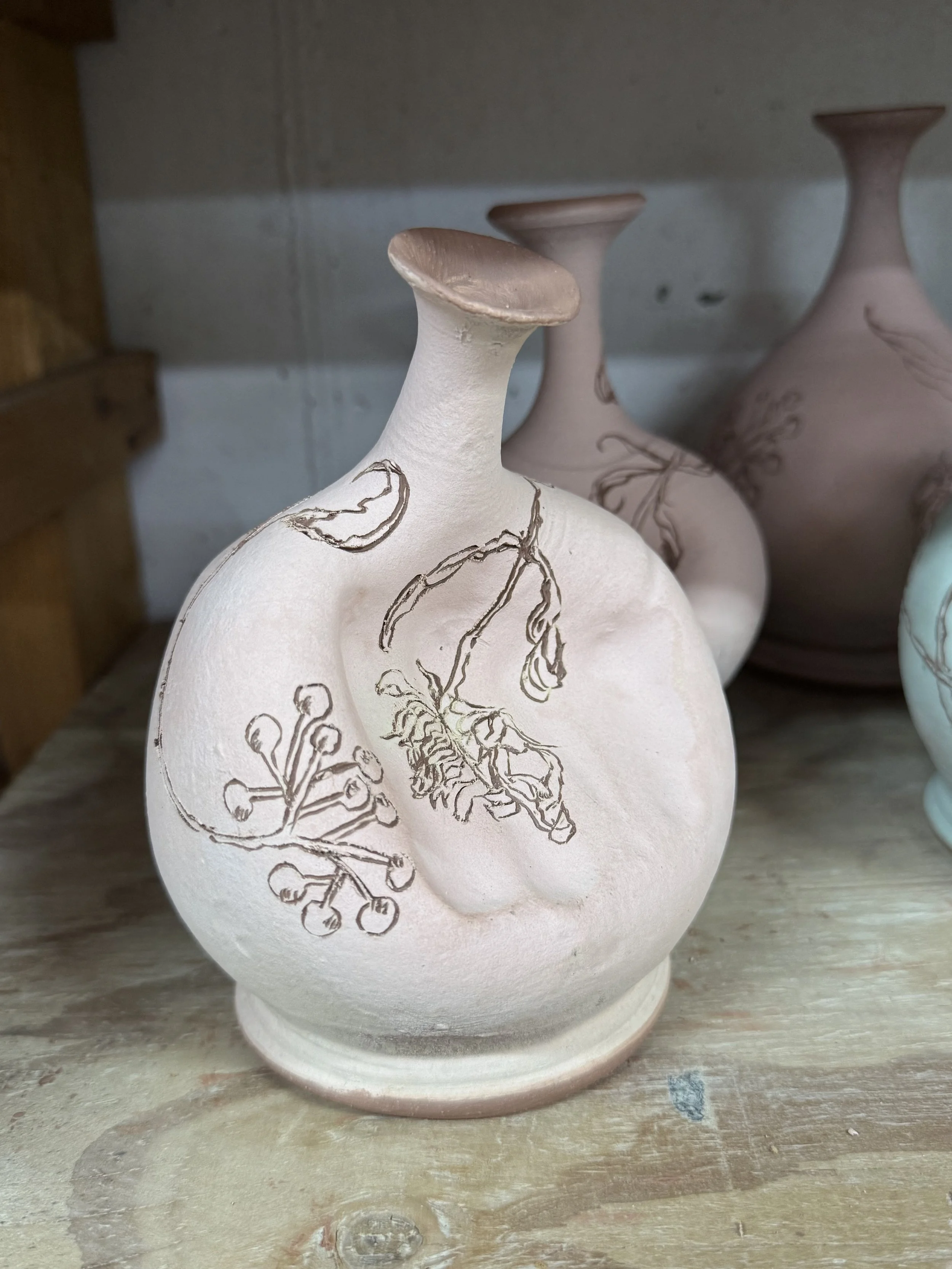
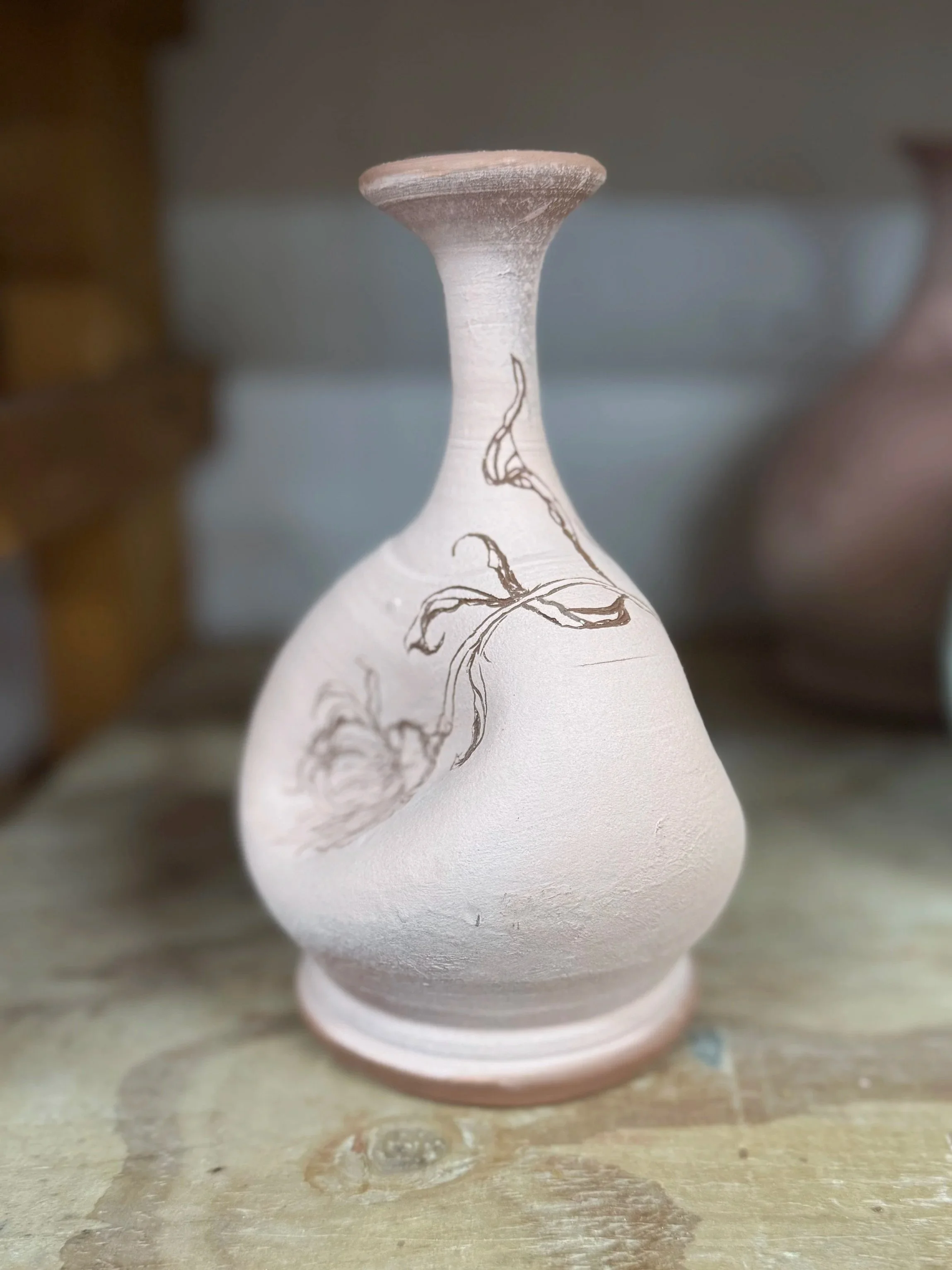
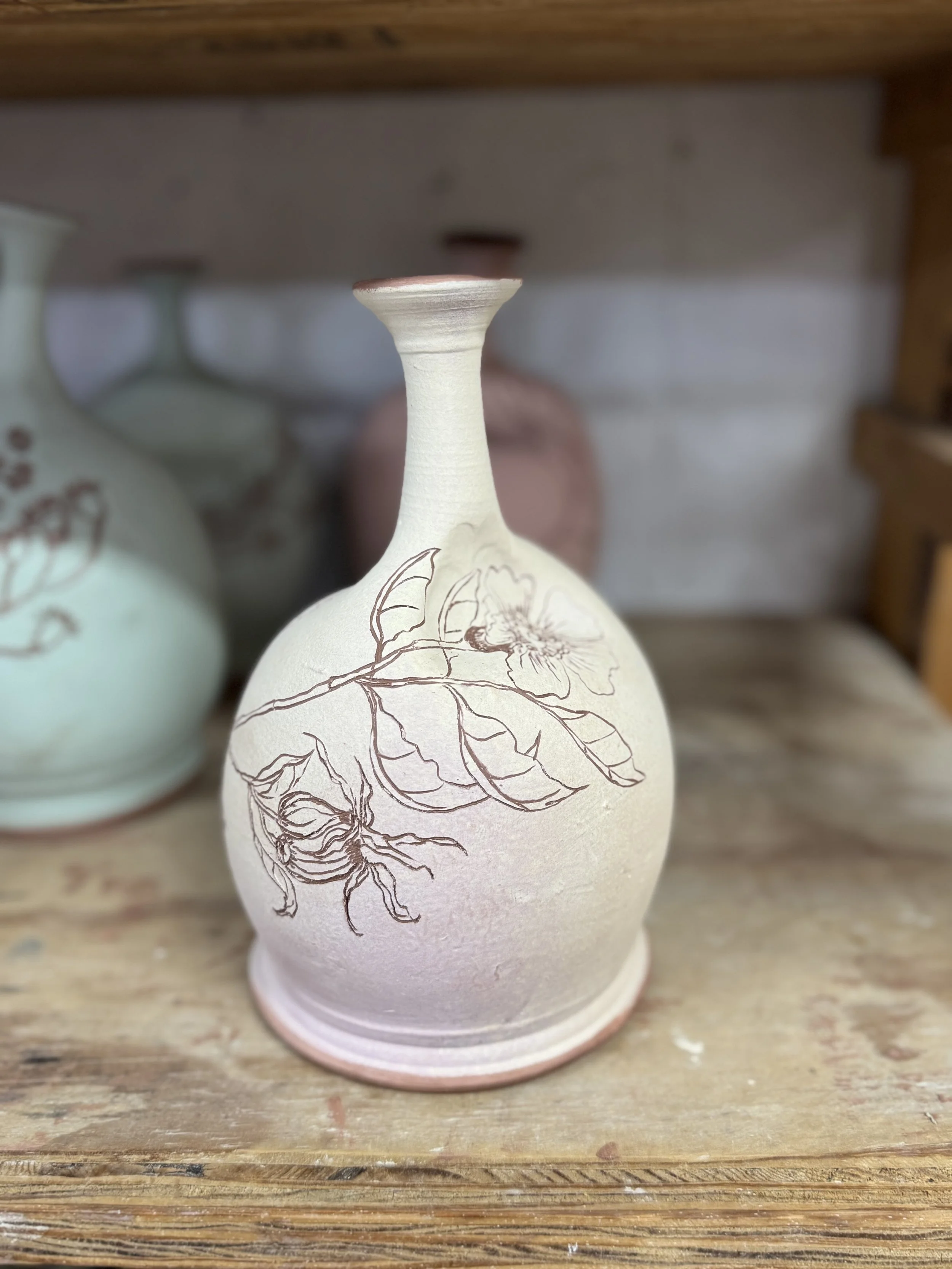
So much for writing every day. I have been throwing a lot on the wheel. I’m thinking these last few days may be spent hand-building and thinking of wall work.
For a while, I wasn't sure where the work was going.
Around day 5 at Queen City Clay, a new body of work began to emerge. I'm calling it The Hand of the Maker.
I don't mean "the Maker" as a god. I mean the people whose hands shape us throughout our lives—the ones who nurture us, protect us, wound us, challenge us, and ultimately leave their mark on who we become.
The past year has been one of the most difficult of my life. I don't think I set out to make work about trauma, but I realize now that I've been working through it in clay.
I've long been interested in Dutch vanitas paintings and their reminders that life is fragile and temporary. That idea remains, but it has shifted. Instead of using the vase simply as a symbol of transience, I'm beginning to think of it as a human vessel.
The forms are no longer perfectly thrown. They are altered by the hand—pinched, pulled, pressed, squeezed, even constricted. Every gesture is intentional. They record both care and harm. Like people, these vessels carry the evidence of the forces that have shaped them.
From those altered forms, medicinal plants begin to grow.
Historically, these plants have been used to soothe wounds, calm the nervous system, restore strength, and encourage healing. They are not decorations. They are acts of hope. They suggest that healing is possible, even when the vessel itself has been permanently changed.
I've been thinking about titles like I Heal Myself and I Still Hold Water.
The second title has stayed with me. There is something deeply human in that statement. A vessel may be dented, scarred, or misshapen, but it can still fulfill its purpose. It can still contain. It can still hold. It can still be enough.
I'm only at the beginning of this new direction, and I'm curious to see where these ideas lead.